
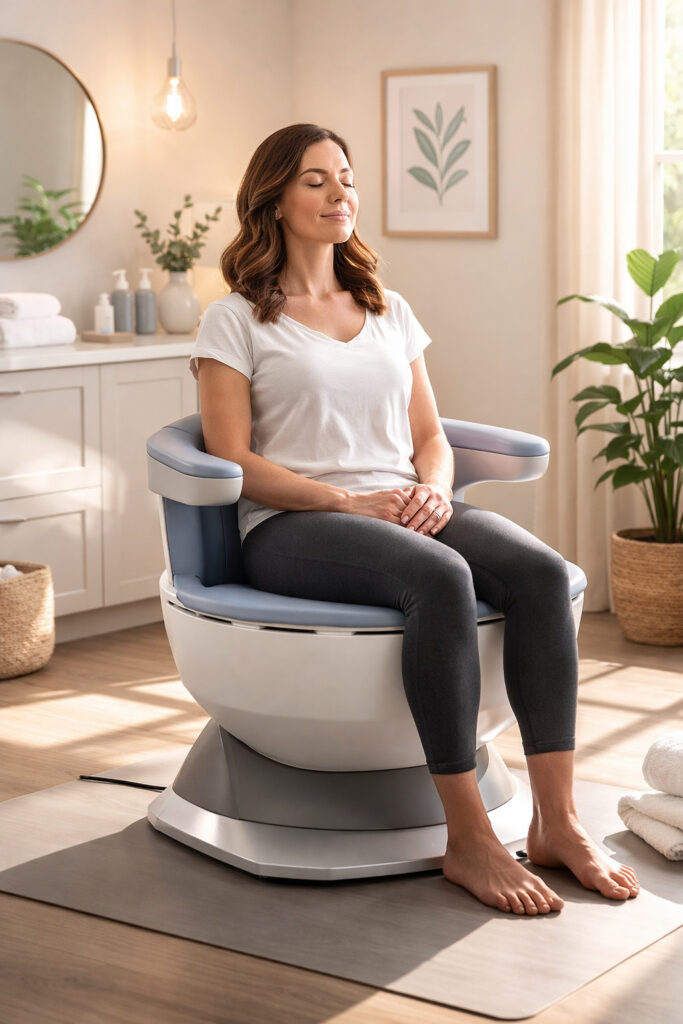
Emsella & PelviPower: What They Are, and What They Really Do for Pelvic Health
Have you heard of pelvic floor “chairs” like Emsella and PelviPower? You might see them offered in beauty salons, spas, or wellness clinics — sometimes marketed as a quick fix for incontinence or prolapse. Let’s look at what these technologies are, how they work, what they can do, and where the limitations lie.
What Are These Pelvic Floor “Chairs”?
Both Emsella and PelviPower are devices that use electromagnetic stimulation to activate pelvic floor muscles. You sit fully clothed on a chair or seat that generates pulses targeting the muscles of the pelvic floor.
How the Tech Works
- The device emits high-intensity focused electromagnetic (HIFEM) energy.
- This energy induces involuntary muscle contractions — similar to doing thousands of pelvic floor contractions in one session.
- A typical treatment might last 20–30 minutes.
In essence, the technology is trying to contract and “exercise” muscles that many people find hard to activate voluntarily. That’s a sensible idea in theory.
What the Devices Can Do
There are (maybe) legitimate benefits when this is used appropriately:
✔ Increased muscle activation and strength
Electromagnetic stimulation can recruit pelvic floor muscle fibres more intensely than most people achieve on their own.
✔ Useful for people with very weak or under-active pelvic floor muscles
For some individuals, especially those who struggle to engage muscles voluntarily, this can provide a helpful boost.
✔ Non-invasive and low risk
The Downsides
Despite what some adverts might claim, these devices are not a magic bullet.
1. It’s Not a Substitute for Skilled Assessment
A pelvic floor practitioner doesn’t just strengthen muscles — we assess for:
- coordination (can you relax and contract appropriately?)
- connective tissue support
- pain or elevated muscle tone
- core and glute strength
- breathing and loading patterns
- bladder, bowel, and sexual function patterns
Without that screening, someone might get “strengthening” when what they really need is relaxation, motor control training, bladder retraining or behaviour modification. Avoid clinics where there’s no clinical screening before treatment.
2. Results Vary
We’ve looked at the clinical evidence for this tech. Some people notice improvements in incontinence symptoms or strength. However, the published studies to date are relatively small and tend to look at short-term outcomes, often around 3 months. Longer-term data is still limited. Others see minimal change. That’s because pelvic health symptoms are multi-factorial.
Electromagnetic stimulation might help some components, but it doesn’t fix all of them.
3. You Need Multiple Sessions & Maintenance
One session does not equal long-term improvement. Most protocols suggest a series of treatments, usually weekly for several weeks, and periodic “top-ups” thereafter for ongoing benefits. It’s pretty expensive too.
Common Issues in Salon Settings
You’ll see these chairs popping up in beauty salons or wellness chains. That’s not inherently bad — but red flags include:
🚩 No medical or pelvic floor assessment
🚩 Staff with no specialist pelvic health knowledge
🚩 Claims of “curing” leaks on the first treatment
🚩 No discussion of lifestyle, habits, bladder/bowel factors
Those offering this tech should be able to explain who it helps, who it doesn’t, and what other care is needed alongside it.
Where We See the Value — and When We Don’t
Potential use cases:
- Someone who can’t voluntarily engage pelvic floor muscles
- Weakness confirmed after assessment
- Treatment supervised or recommended by a pelvic health clinician
Less likely to benefit:
- People with pelvic pain where tension, not weakness, is the issue
- Urgency or frequency driven by bladder behaviour, not strength alone
- Anyone expecting a single treatment “cure”
But even then, you should be prepared to have regular follow up treatments to maintain any results you are achieved.
The Bottom Line
Emsella, PelviPower, and similar devices can play a role in pelvic health. But they’re not a panacea, not suited for every condition, and require clinical oversight to be used well.
We also think it’s telling that we get these machines advertised to us all the time and the main message in the emails is ‘This clinic made £20k last month with this chair‘ and not ‘90% of our patients reported a large improvement in their bladder leaking last month‘. We only invest in technology based on clinical outcomes rather than projected revenue. That’s why you won’t see a pelvic floor chair at Pelvix at the moment.
If you’re considering this kind of treatment:
- Ask for a pelvic floor assessment first
- Understand your goals and what’s realistic
- Treat it as part of a broader plan — not a standalone fix