Pregnancy MOT in Bristol & Bath
How to prepare your body — not just your nursery.
Pregnancy is, by most measures, a fairly substantial event. The “expecting” bit is generally well-covered — by midwives, mums, friends, NCT and the internet at large. Less covered is what you can usefully do physically — to settle the niggles you have right now, prepare your body for birth, and make a plan for your recovery.
That’s what a Pregnancy MOT is for. It’s a structured one-hour antenatal physiotherapy session with a specialist physiotherapist, covering the pain and pelvic-floor concerns that come up in pregnancy, birth-prep coaching and a practical plan for the weeks ahead. It runs alongside your midwife and GP care, not instead of it.
Common reasons women come. Pelvic girdle pain that makes turning over in bed feel impossible. Lower back pain that’s starting to limit movement. New bladder symptoms (or ongoing symptoms). Wanting to feel prepared for birth rather than hoping for the best. Wanting to know how to set up recovery before the baby arrives.

What we look at
Pain and movement
- Pelvic girdle pain (PGP)
- Pelvic and lower back pain that’s affecting sleep, work or walking
- Hip, rib and upper back discomfort as the bump grows
Pelvic floor function
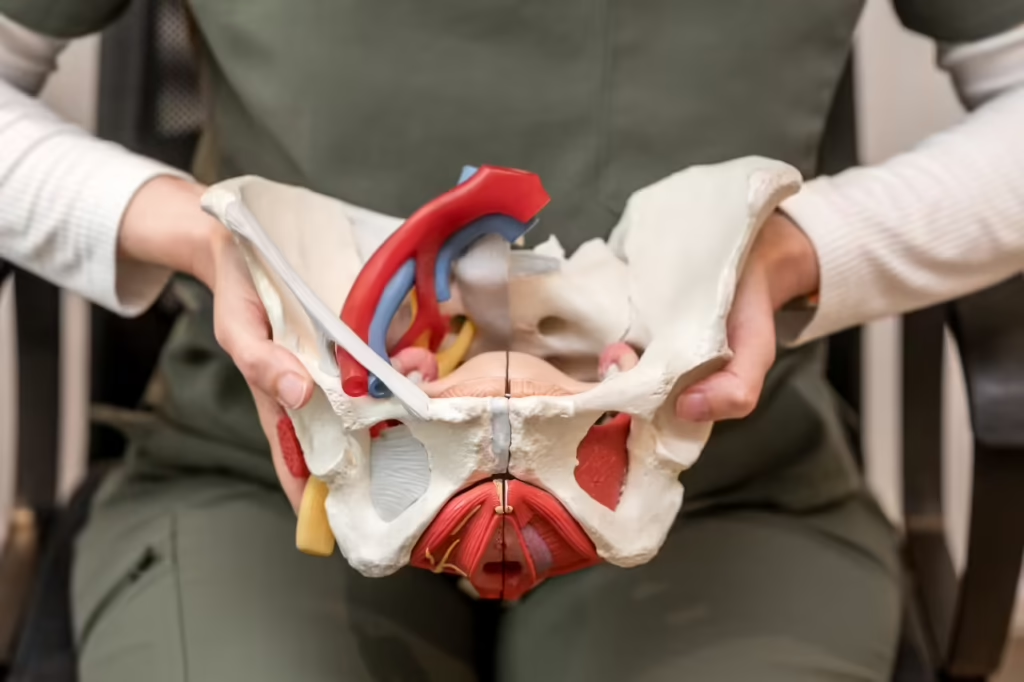
- Strength, coordination, and — crucially in pregnancy — your ability to relax the pelvic floor
- Bladder symptoms that have started in pregnancy
- Early signs of prolapse or heaviness
Birth preparation
- Birth positions that work with your body
- Breathing for labour — the practical kind that helps your pelvic floor relax and stretch
- Perineal massage technique and timing
- Learning to push effectively in labour — many women instinctively tighten the pelvic floor while pushing, which works against you. We teach the opposite: how to let the pelvic floor yield while you breathe and bear down
- Strategies to reduce the risk of perineal tearing
Posture, movement and load
- Sitting, lifting, sleeping and wrangling toddlers into car seats
- Safe exercise modifications for the trimester you’re in
- What to do — and what to leave alone — if you’re training through pregnancy
Setting up postnatal recovery
- Early recovery planning so your recovery gets off to a good start
- When and how to book your Mummy MOT®
What happens at your first appointment
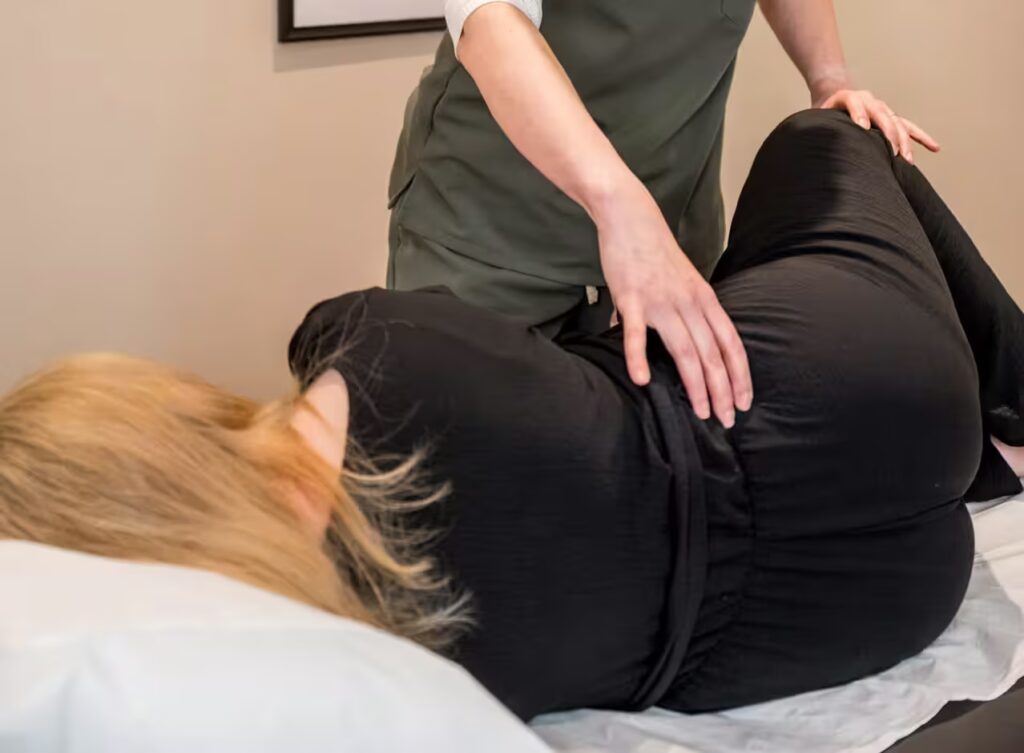
A full conversation.
A physical assessment.
A clear plan.
What treatment involves
- Pelvic girdle and back pain management — manual therapy, targeted exercise, taping, support belts where indicated, and the small daily-routine adjustments that often make the biggest difference
- Pelvic floor work — strengthening, releasing or coordination work depending on what your muscles actually need. In pregnancy, the relax-and-yield work matters as much as the squeeze-and-hold
- Birth preparation coaching — positions, breathing, perineal massage technique, and the practical skills that help labour go more smoothly
- Posture, breathing and load management — how to sit, lift, sleep and move with rather than against your changing body
- Safe exercise progression — adjusting your training (whatever it is) for each trimester
- Postnatal recovery planning — what to expect, what to look out for, when to book your Mummy MOT®, and how to set the early weeks up to support recovery
When in pregnancy to come
Before 14 weeks:
14 to 28 weeks (second trimester):
29 to 36 weeks (third trimester)
37 weeks onwards:
Between appointments
Most women benefit from a short, well-designed home programme rather than a long list of things to remember. We’ll show you what to do and roughly how often. For pelvic floor work, we sometimes recommend the NHS-supported Squeezy app to keep you on track.
Pricing
A Pregnancy MOT is £108 with our specialist physiotherapists.
Combined Pregnancy MOT and Mummy MOT® packages are available at £205 — useful if you know you’ll want both, and a small saving on the two individually.
See our full pricing page for follow-up rates.