
Mummy MOT in Bristol & Bath
Is my postpartum recovery normal?
Your six-week GP appointment is an important part of postnatal care. It’s designed to check in on your general wellbeing, look at any complications from pregnancy and birth, and address any concerns you raise. What it isn’t designed to do — and your GP would say the same — is a detailed assessment of how your abdominal wall is healing, how your pelvic floor is functioning, how your scar (if you have one) is settling, or whether your body is ready for the things you actually want to do, like picking up a toddler, returning to running or lifting at the gym. Most women, particularly first-time mums, often have no idea how their recovery is going, or if what they’re feeling is normal.
That’s what a Mummy MOT® is for. It’s a structured one-hour physical recovery review with a Mummy MOT®-trained physiotherapist — designed to complement the six-week check, not replace it. We assess what’s happening, what’s healing well, what isn’t, and we give you a clear plan to get from where you are now to where you want to be.
It’s never too late. Most of the women we see at Pelvix had their babies more than a year ago. Postnatal recovery doesn’t have a deadline. If something hasn’t felt right since pregnancy or birth, a Mummy MOT® is the right starting point.
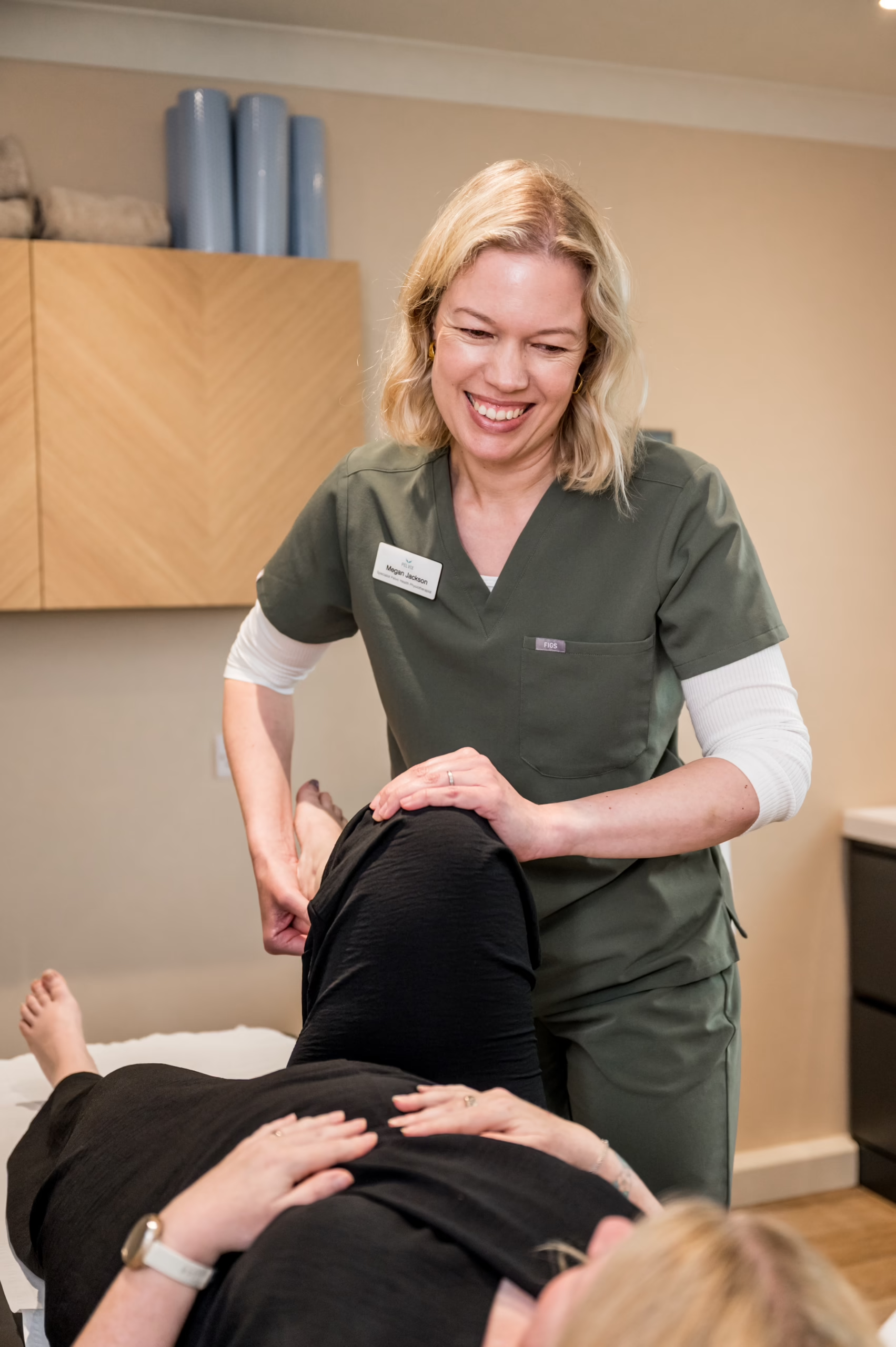
What we look at
Abdominal wall recovery
- Diastasis recti — how wide is the gap but more crucially, how is the tissue functioning under load?
- Deep abdominal activation and connection through breath
- Pressure management through the abdomen
Pelvic floor function
Scars and tissue healing
- Caesarean scar mobility, sensation and how it moves with you
- Perineal scar from tearing or episiotomy
Posture, movement and load
- How your body is currently absorbing and transferring load — particularly when you lift, carry or run
- Hip, lower back and rib cage mobility
Goals and readiness
- What you actually want to do — return to running, HYROX, lifting heavy, getting back to a particular
- sport or just to be able to get back to everyday activities in a body that feels resilient
- An honest sense of whether your body is currently ready for that, and a graded path if it isn’t
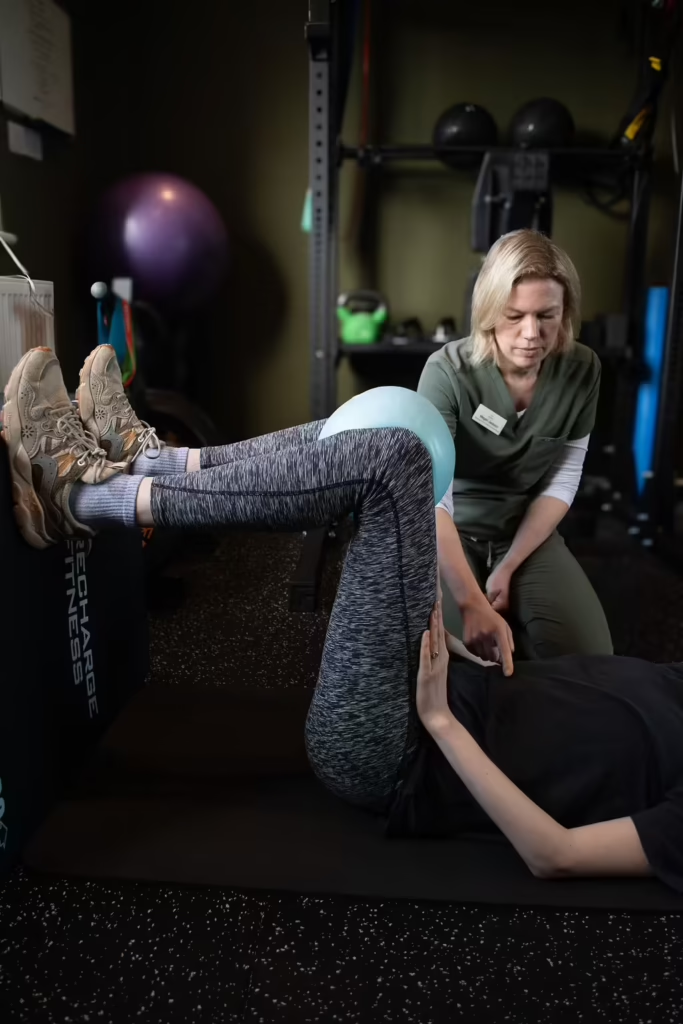
What happens at your first appointment
A full history.
A physical assessment.
A clear plan.
What treatment involves
- Pelvic floor retraining — strengthening, releasing or coordination work, depending on what your muscles actually need
- Deep abdominal and breath work — restoring the connection between your diaphragm, deep abdominals and pelvic floor
- Caesarean scar therapy — for scars that feel tight, restricted or numb. See also our standalone Scar Therapy service.
- Manual therapy — for joints and soft tissue around the pelvis, hips, lower back and abdomen
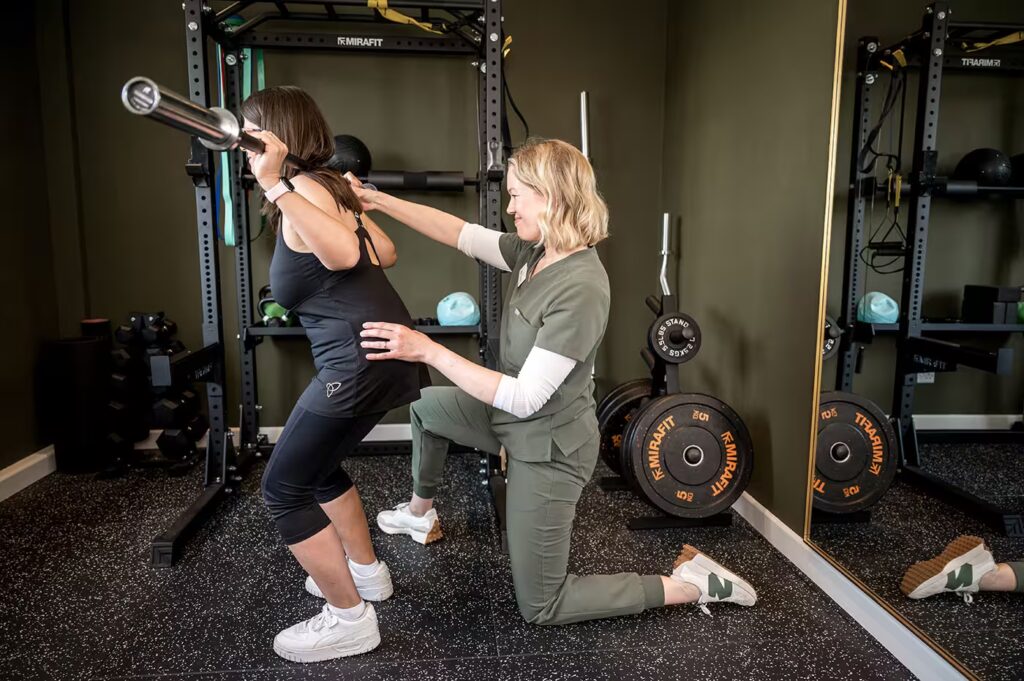
- Graded return-to-running — using objective return-to-impact testing rather than guessing
- Strength and load progression — particularly for women aiming to lift heavy, return to HYROX, or get back to sport. Our Strength Training for Menopause & Beyond (link to page) programme can pick up where this leaves off
- Pelvic organ prolapse management — conservative care including pessary signposting where relevant
- Whole-day load management — how to lift your baby, push a buggy, sleep, sit and move in ways that support rather than fight your recovery
Between appointments
Most women benefit from a short, well-designed home programme rather than a long, vague one. We’ll show you exactly what to do and how often. For pelvic floor exercises specifically, we sometimes recommend the NHS-supported Squeezy app to help you stay consistent. For abdominal and breath work, we’ll usually practice it with you and then send written cues for home.
Pricing
Combined Pregnancy MOT and Mummy MOT® packages are available at £205 — useful if you’re already planning to assess both pregnancy health and birth preparation, and postnatal recovery.
See our full pricing page for follow-up rates and the Core & Confidence programme
Frequently asked questions
When can I have a Mummy MOT®?
Will I need an internal examination?
Can I bring my baby?
Is the Mummy MOT® only useful in the first year?
Can it help me return to running?
What about HYROX, CrossFit or heavy lifting?
Do you treat C-section scars?
Yes. We assess your scar as part of the Mummy MOT® assessment. If your scar is giving you bother, we always recommend Caesarean scar therapy which is available through Amy