
Focused extracorporeal shockwave therapy (ESWT)
How It Works
Pelvic health conditions that can be treated with Focused Shockwave
- Pelvic & Sexual Health Conditions
- Erectile dysfunction (ED)
- Peyronie’s disease
- Hard flaccid syndrome (HFS)
- Chronic pelvic pain syndrome (CPPS)
- Pudendal neuralgia
- Vulvodynia
- Osteitis Pubis
Musculoskeletal & Orthopaedic Conditions
- Plantar fasciitis
- Achilles tendinopathy
- Patellar tendinopathy
- Hamstring tendinopathy
- Lateral epicondylitis (tennis elbow)
- Greater trochanteric pain syndrome
- Calcific tendonitis
- Shin splints
- Carpal tunnel syndrome
- Stress fractures and delayed bone healing
What should I expect during shockwave treatment?
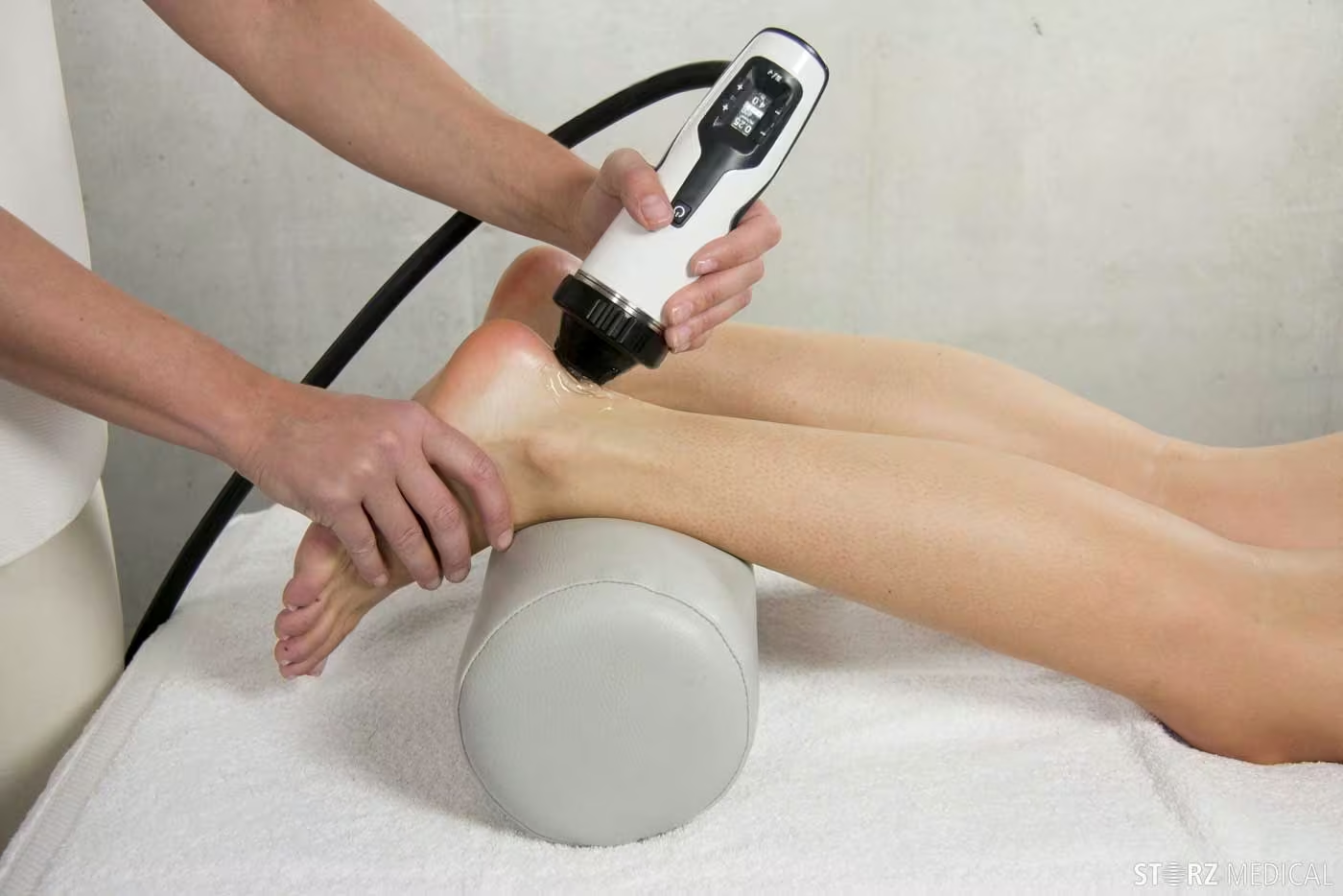
During your session, a handheld device is used to deliver focused sound waves to the target area. You may feel a tapping or pulsing sensation, which can be mildly uncomfortable but not usually painful. Treatment typically lasts around 15–20 minutes, and you’ll be able to return to your usual activities straight afterwards.
Are there any side effects with shockwave therapy?
Shockwave therapy is generally very safe. Some people may experience mild discomfort during treatment, or a temporary increase in symptoms for 24–48 hours afterwards. You might also notice slight redness or sensitivity in the treated area — this is a normal part of the healing response and usually settles quickly.
How effective is shockwave therapy?
Research shows that focused shockwave therapy is highly effective for certain conditions. It has a success rate of around 70–85% for vascular erectile dysfunction (ED), and is also supported by NICE for specific tendinopathies. Results can vary depending on the condition being treated, how long you’ve had it, and any underlying health factors — but many patients report significant improvement in symptoms.
How soon should I notice a difference after shockwave therapy?
Some people notice improvements after just one or two sessions, while for others it may take a few weeks. Because the treatment works by stimulating natural healing processes, results can continue to develop even after the course of treatment has finished.
Are there any reasons I wouldn’t be suitable for shockwave therapy treatment?
Shockwave therapy is suitable for most people, however you may not be able to have it if you have a bleeding disorder, are on blood-thinning medication, have a pacemaker or active cancer in the treatment area. We’ll always assess your medical history beforehand to make sure it’s safe and appropriate for you.
How many shockwave therapy sessions would I need?
Most people need a course of 3 to 6 sessions, typically carried out once a week. The number of treatments may vary depending on your symptoms, condition, and how you respond to therapy. Treatment for ED or pelvic pain may require 6-12 sessions. This will be discussed with you during your initial consultation, and a plan will be tailored to your needs.
How is focused shockwave different from radial shockwave?
Focused shockwave penetrates the tissues more deeply and effectively than radial which treats superficially. Radial shockwave is also unsuited to treating any conditions around the pelvis. For more information please see this video.