
Let’s Talk About Bladder Urgency
First, let’s think about what it isn’t…
It isn’t leaking when you cough, sneeze or exercise (that’s stress incontinence).
Urinary Urgency is a symptom of Overactive Bladder (OAB). It’s usually an overwhelming sensation and almost impossible to ignore.
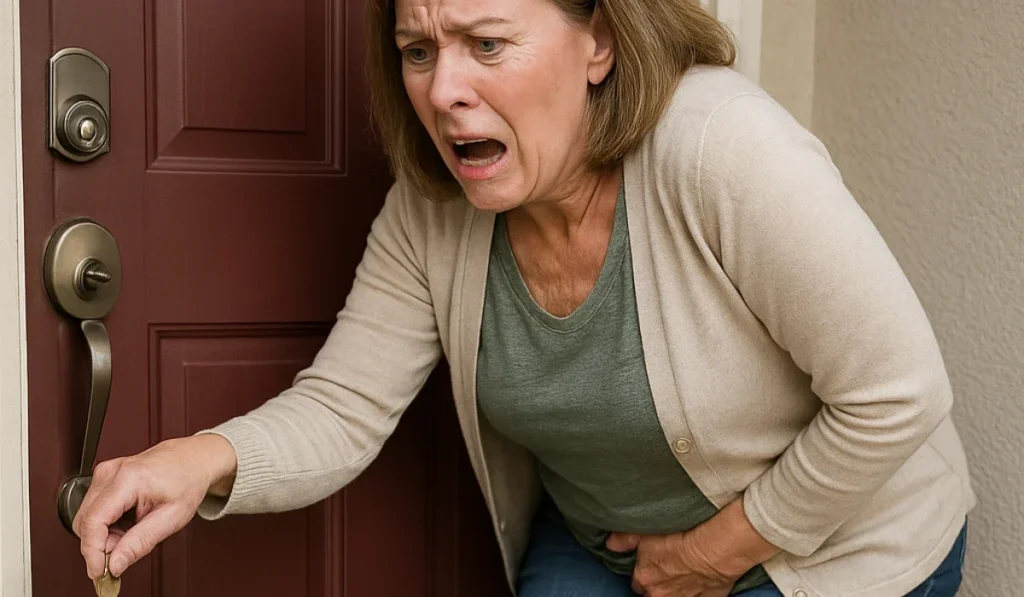
Have you ever arrived home, feeling fully in control of your bladder on the way? You might not even really need to pee much during the journey. However, the second you get to the front door, everything changes. You struggle to get the key in the lock, dump your bag down and rush to the loo, undoing your trousers as you go — because your bladder insists you go now.
Overactive Bladder Has Four Main Symptoms
– Urgency – an often sudden, desperate sensation to pass urine
– Frequency – going more than 4–7 times per day or more frequently than every 3–4 hours (also depends on fluid intake)
– Nocturia – getting up to pee more than once a night
– Urge incontinence – urinary leakage as a direct result of urgency
You might have them all, or just some, but the main symptom is urgency.
It will manifest differently for different people. You might be fine until you get within range of the toilet, and then it feels like your bladder is a few steps ahead of you — like the flow wants to start before you’re ready. Or it might dictate your days out, requiring advance planning to check toilet availability and knocking your confidence in new places. You might find that your bladder behaves differently in different situations.
You start wondering if it’s all in your head (more on that later).
When to See Your GP to Rule Out Other Issues
It’s important to say that neurogenic bladder is a slightly separate issue. It relates to similar symptoms caused by central nervous system dysfunction (e.g. Parkinson’s or stroke), or spinal cord damage or disease. Bladder symptoms can also arise from pelvic radiation treatment, ketamine use, or certain medical conditions (like diabetes), which require a different management approach.
If you’re over the age of 50 and have new bladder symptoms — such as frequency or discomfort — but keep testing negative for infection, speak to your GP to rule out anything more serious.
Also, if you’re an older adult experiencing new symptoms like bladder urgency or urge incontinence, alongside confusion, memory loss, or changes in mobility (e.g. unsteadiness or a shuffling gait), you should be assessed for hydrocephalus (a build-up of fluid in the brain).
See here for more information.
What Causes OAB?
It’s often hard to pinpoint one exact cause, but factors may include:
– Age
– Hormonal status (e.g. decreasing oestrogen)
– Reduced anatomical support of the urethra (bladder tube)
– Excessive activity in the detrusor (bladder) muscle
– Incomplete emptying or hypotonic (floppy) bladder
– Suboptimal fluid intake
– Constipation
– Reduced compliance (stretchiness) of the bladder
– Poor pelvic floor strength or endurance
– Psychological factors (e.g. stress or anxiety around symptoms)
– Genetic predisposition
There are often several contributing factors — which is why a careful assessment is key. To treat it effectively, we need to understand why it’s happening.
So How Much of This Is Psychological?
The best answer: some — but not in all cases.
Your bladder can become conditioned to behave in a certain way in specific situations.
For example, if you generally avoid public toilets and tend to wait until you’re home, your brain and bladder start to associate home with peeing. Over time, the anticipation strengthens until your bladder begins to squeeze — and gives you that urgent feeling — well before you’re on the toilet.
This is known as anticipatory urgency. It doesn’t only happen when you arrive home — sometimes, you might feel in control right up until the moment you decide to go, and suddenly the bladder is a step ahead as soon as the loo is in sight.
This can create a vicious cycle. The urgency makes you anxious about leaking, which gives it more brain space and amplifies the sensation. The more you rush to the toilet, the worse the urgency, and the more likely you are to leak.
So What Are the Next Steps?
Step 1 – Physical Assessment
We start with a physical exam to assess any contributing physical factors such as pelvic organ prolapse, pelvic floor weakness, or increased pelvic floor tone.
Step 2 – Bladder Diary
This involves peeing into a jug for two days and recording volumes, timings, urgency episodes and fluid intake. The results are plotted on a graph to help us interpret what’s going on.
Step 3 – Review and Plan
We review the bladder diary together and create a tailored treatment plan.
Treatment Options
There’s no one-size-fits-all treatment for OAB. But here are some of the most common and effective options we use at Pelvix:
Bladder Drill & Re-training
This behavioural approach helps increase bladder capacity and reduce urgency. Patients are supported to gradually increase the time between voids (though initially, this might mean going more often). Over time, the bladder becomes less reactive and more able to hold a normal amount of urine. It’s simple but powerful — and requires consistency.
Transcutaneous Tibial Nerve Stimulation (TTNS)
TTNS is a non-invasive treatment that uses gentle electrical stimulation near the ankle to calm bladder activity. The tibial nerve shares roots with bladder nerves, and stimulating it can help reduce urgency, frequency, and urge incontinence. It’s low risk and usually well tolerated.
Optimisation of Pelvic Floor Function
The pelvic floor muscles play a critical role in bladder control. If they’re weak, overactive, or not coordinating well, they can worsen urgency. A pelvic health physiotherapist can assess and retrain these muscles so they work when they should — and not when they shouldn’t.
Optimising Bowel Function, Fluid Intake & Hormonal Support
We address constipation, adjust fluid intake patterns, and identify irritants. For peri- and post-menopausal women, vaginal oestrogen may be discussed to support the health of the bladder and urethral tissues.
Conclusion
Overactive bladder can feel unpredictable, frustrating and even isolating — but you’re not alone, and it’s not something you just have to put up with. Understanding what’s going on is the first step, and with the right assessment and support, most people see a big improvement. Whether it’s simple tweaks to habits or more targeted therapies, there are effective ways to take back control of your bladder (and your confidence).