
Women's Health Physiotherapy in Bristol & Bath
Specialist Physiotherapy for Women's Pelvic Health
Pelvic health physiotherapy for women, delivered with clinical depth and unhurried care.
Personalised Women's Health Support That Meets You Where You Are
Pelvic health issues are common in women — leakage, urgency, prolapse, pelvic pain, recovery after birth or surgery — and they remain under-treated. Too many women are told that symptoms are normal after children, normal after menopause, or that there is nothing to be done.
At Pelvix, women’s pelvic health is the foundation of the clinic. We see women through every stage —young adults, pregnancy, the postnatal year, perimenopause and menopause, and beyond. Our clinic in Keynsham, serving Bristol, Bath and surrounding areas, works alongside local GPs, gynaecologists, urogynaecologists and consultants when joined-up care is helpful.
Every consultation is private, unhurried and led by you. Your pelvic health physiotherapist is HCPC-registered and has gone through specialist training to equip them with the skills needed to work in pelvic health. Nothing is too embarrassing and nothing too trivial.
At Pelvix, women’s pelvic health is the foundation of the clinic. We see women through every stage —young adults, pregnancy, the postnatal year, perimenopause and menopause, and beyond. Our clinic in Keynsham, serving Bristol, Bath and surrounding areas, works alongside local GPs, gynaecologists, urogynaecologists and consultants when joined-up care is helpful.
Every consultation is private, unhurried and led by you. Your pelvic health physiotherapist is HCPC-registered and has gone through specialist training to equip them with the skills needed to work in pelvic health. Nothing is too embarrassing and nothing too trivial.
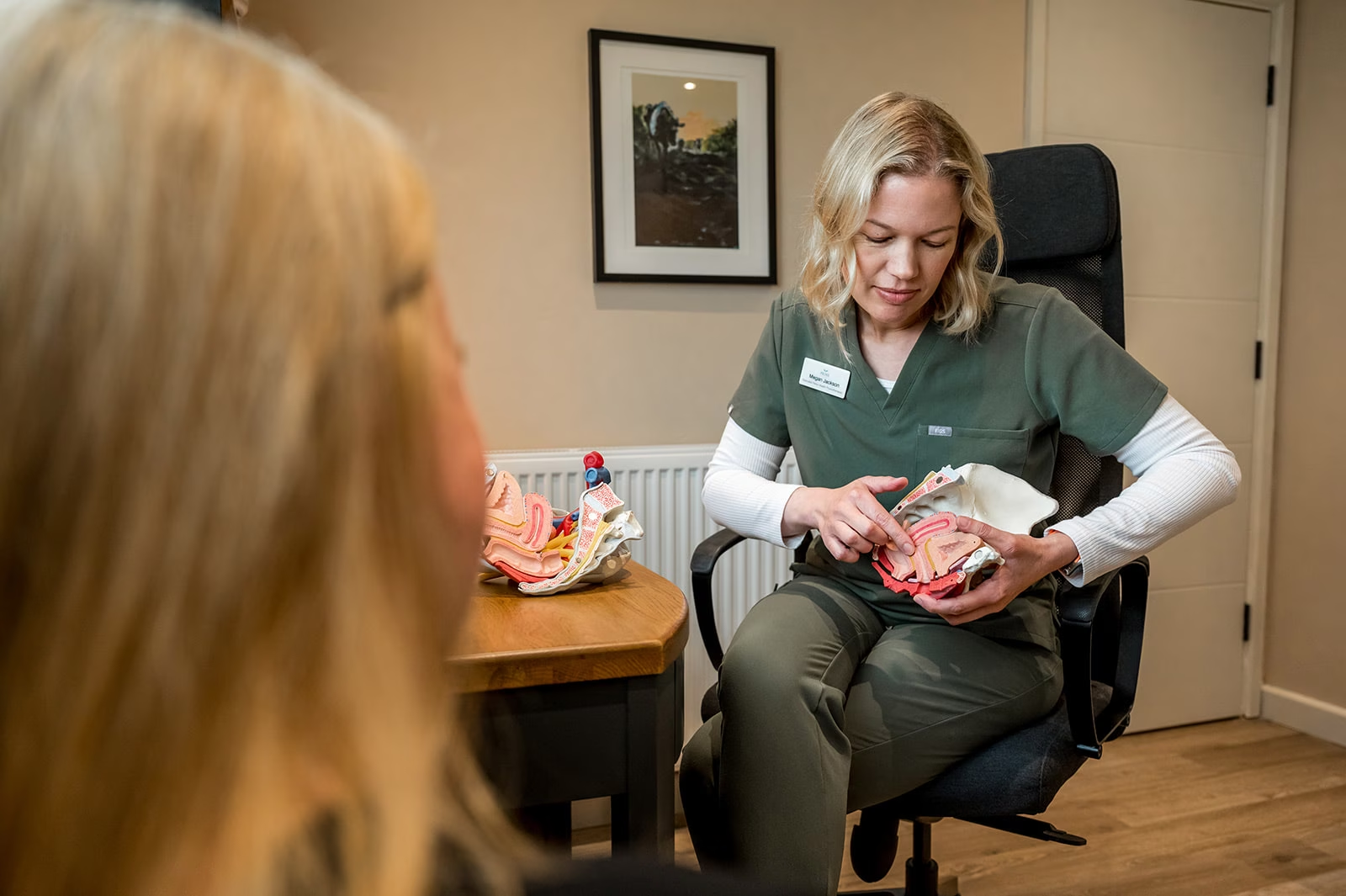
Conditions We Treat
Bladder concerns
- Stress incontinence
- Urge incontinence and overactive bladder
- Urinary urgency and frequency
- Nocturia (waking to urinate at night)
- Incomplete emptying or hesitancy
Bowel concerns
- Bowel urgency and incontinence
- Constipation
- Anismus and dyssynergic defecation
- Obstructive defecation
Pelvic organ prolapse
Pelvic and sexual pain
- Persistent (chronic) pelvic pain
- Vulvodynia and vestibulodynia
- Vaginismus
- Dyspareunia (pain with sex)
- Endometriosis-related pain
- Bladder pain syndrome/interstitial cystitis
Pregnancy and postnatal care
Menopause and beyond
- Genitourinary syndrome of menopause (GSM)
- Pelvic floor dysfunction
- Strength and load training through menopause
Pre- and post-gynaecological surgery
- Pre- and post-hysterectomy rehabilitation
- Recovery from prolapse repair
- Rehabilitation after gynaecological cancer treatment, where indicated
Pelvic floor dysfunction
- Overactive (tight) pelvic floor
- Underactive (weak) pelvic floor
- Coordination problems affecting bladder, bowel or sexual function
What Happens at Your First Appointment
A full history. We start by talking. Bladder, bowel, sexual function, pain, menstrual and gynaecological history, pregnancies and births, surgery, medication, exercise, sleep, work — the picture matters. Many women have never been asked these questions properly before. We take the time to really listen.
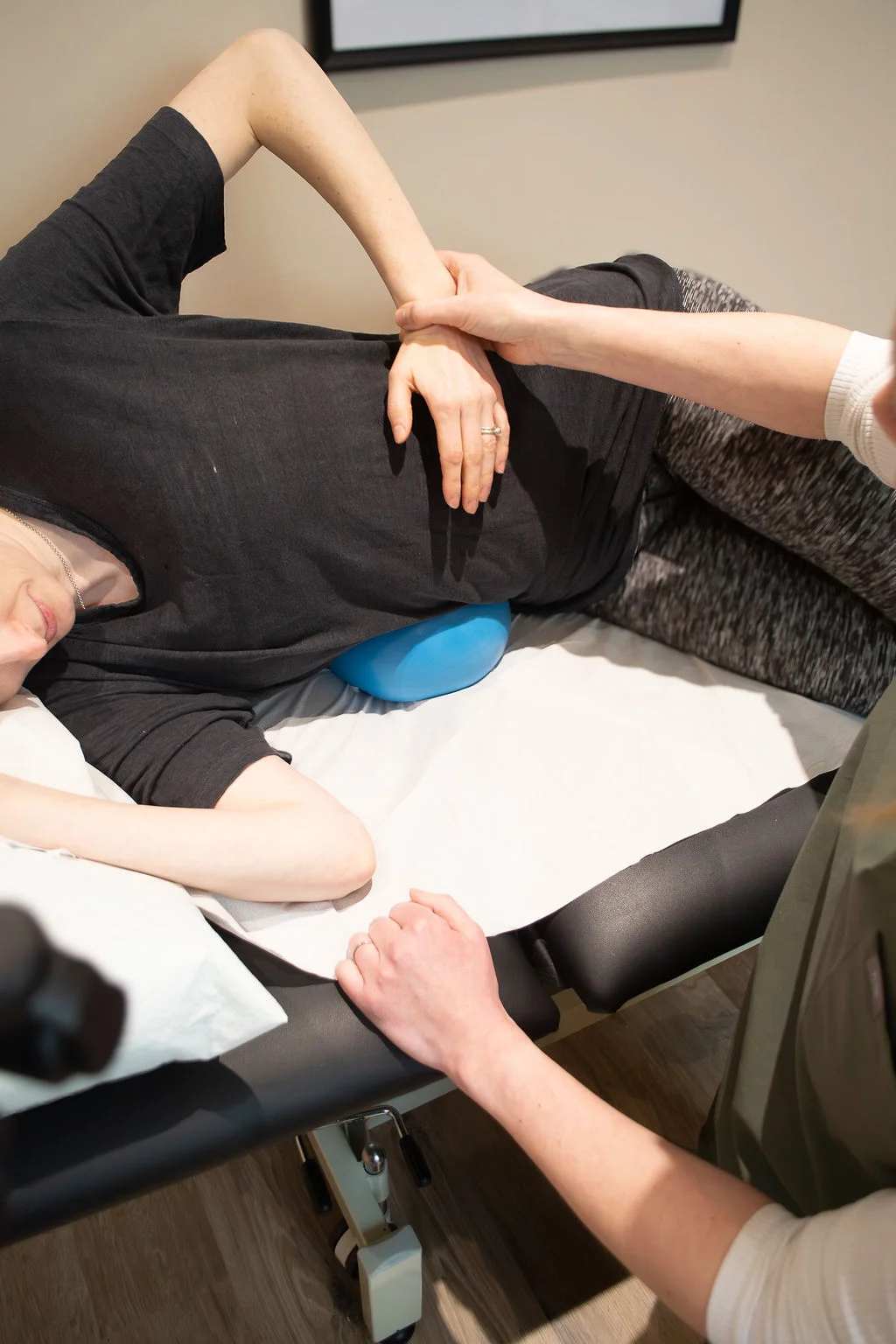
A physical assessment. Depending on your symptoms, this may include looking at how you move, how you breathe, posture, hip and lower-back mobility, and the muscles around the abdomen and pelvis. Where it’s clinically appropriate and only with your explicit consent, a vaginal examination allows us to assess pelvic floor tone, strength, coordination and any prolapse directly. We’ll always explain what we’re proposing, why, and what the alternative is.
A clear plan. You’ll leave with a working diagnosis (or a short list of what we need to rule in or out), a treatment plan that fits the rest of your life, and an honest sense of how long things are likely to take.
A physical assessment. Depending on your symptoms, this may include looking at how you move, how you breathe, posture, hip and lower-back mobility, and the muscles around the abdomen and pelvis. Where it’s clinically appropriate and only with your explicit consent, a vaginal examination allows us to assess pelvic floor tone, strength, coordination and any prolapse directly. We’ll always explain what we’re proposing, why, and what the alternative is.
A clear plan. You’ll leave with a working diagnosis (or a short list of what we need to rule in or out), a treatment plan that fits the rest of your life, and an honest sense of how long things are likely to take.
What Treatment Involves
Pelvic health physiotherapy is based on exercise, manual therapy and education — with a
small number of advanced tools used where the evidence supports them. Your plan may
include:
- Pelvic floor retraining — strengthening, relaxation, or coordination work depending on what your muscles actually need. A weak pelvic floor and an overactive pelvic floor look similar from the outside; they need very different care.
- Bladder and bowel retraining — practical, evidence-based techniques that retrain habits and urgency
- Manual therapy — hands-on work for the muscles, joints and connective tissue around the pelvis, hips and abdomen.
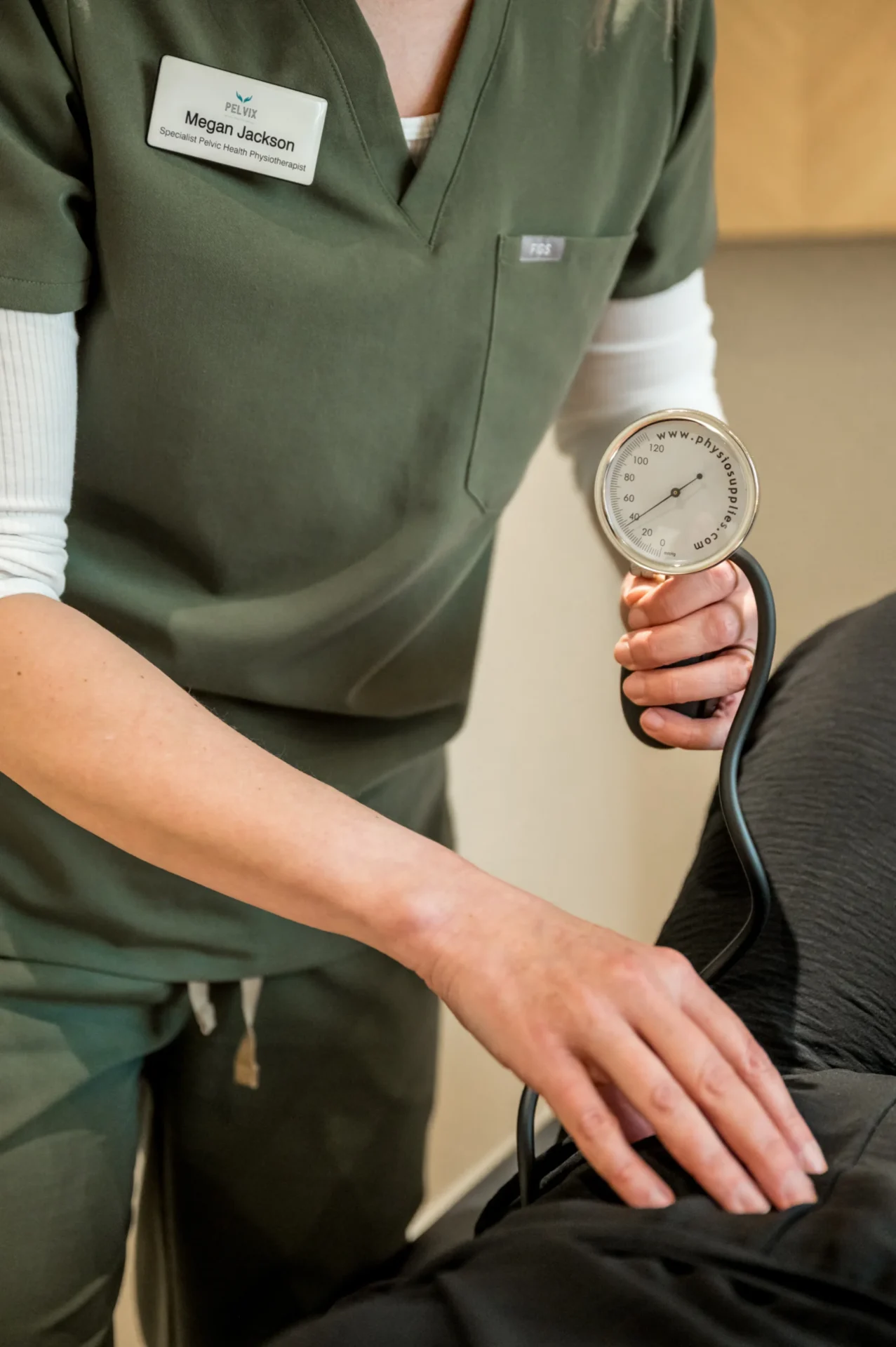
- Biofeedback and real-time feedback — so you can see and feel what your pelvic floor is doing.
- Scar therapy — for Caesarean and abdominal scarring.
- Postnatal and return-to-running rehab — graded, individualised programmes.
- Strength and load training — particularly relevant through perimenopause and menopause.
- Breathing and nervous-system work — particularly for pelvic pain and overactive pelvic floor.
- Pessary signposting and education — for women exploring conservative prolapse management.
- Lifestyle and education — fluids, fibre, training load, sleep, stress and the small day-to-day changes that often make a big difference.
Between Appointments
Most women benefit from a short, well-designed home programme rather than a long, vague
one. We’ll show you exactly what to do, how often, and what good technique feels like. For
pelvic floor exercises, we sometimes recommend the NHS-supported Squeezy app to help
you stay consistent.
Pricing
Please see our pricing page for more information. We are also recognised by most major
insurers.
FAQ
Will I need an internal examination?
Not always. A vaginal and/or rectal examination is the most accurate way to assess pelvic
floor tone, coordination and prolapse, but we’ll only suggest it if it’s clinically helpful, and
you’ll always be in full control of whether it happens. Many women are assessed and treated
effectively without one.
I've just had a baby — when can I come in?
Postnatal assessments usually start from around six weeks for vaginal birth and six to eight
weeks following a Caesarean, in line with NHS guidance. If you have concerns before then,
get in touch — we can speak by phone, give early-recovery advice, and book you in as soon
as it’s appropriate. The Mummy MOT is designed specifically for
this.
I'm pregnant — is it safe?
Yes. Pelvic health physiotherapy during pregnancy is safe and well-evidenced, particularly
for pelvic girdle pain, low-back pain, bladder symptoms and birth preparation. The
Pregnancy MOT is designed specifically for this.
How many sessions will I need?
It depends on the problem. Many women see meaningful change within four to six sessions;
persistent pelvic pain, prolapse rehabilitation and complex postnatal recovery often need a
longer course. We’ll give you an honest estimate at your first appointment.
Can physiotherapy really help prolapse?
Yes. For many women with mild to moderate prolapse, supervised pelvic floor muscle
training can reduce symptoms and is recommended as a first-line conservative treatment.
Where surgery is being considered, pre-and post-operative physiotherapy supports better
outcomes.
What if I'm on my period?
It’s absolutely fine to come. If you’d prefer to reschedule an internal examination, just let us
know (although we can still assess you effectively if you’re menstruating).
Is it confidential?
Yes. Your records, the conversation and everything in your appointment is private. We only
share information with other clinicians with your explicit written consent or where required by
law.
Book your women's health appointment
Same-week appointments are often available. No GP referral needed.